Leverage is one of the most powerful — and most misunderstood — concepts in finance. At its core, leverage means using borrowed capital to control a position larger than what your own funds would allow. In everyday finance, businesses use leverage to fund expansion. In trading, it means you can open a $10,000 position with just $500 in your account.
Used wisely, leverage can significantly amplify your returns. Used carelessly, it can wipe out your account in a single trade. This guide breaks it all down — clearly, honestly, and with real examples.
What is Leverage in Trading?
Leverage in trading is a tool that allows you to control a much larger market position by putting down only a fraction of the total trade value — known as margin. Your broker effectively lends you the rest.
For example, with 10:1 leverage, a $1,000 deposit gives you exposure to a $10,000 position. If the market moves in your favor, your profits are calculated on the full $10,000 — not just your $1,000. The same applies to losses.
Leverage is expressed as a ratio:
- 5:1 — $1 controls $5 worth of assets
- 10:1 — $1 controls $10 worth of assets
- 50:1 — $1 controls $50 worth of assets
- 100:1 — $1 controls $100 worth of assets (common in forex)
Regulatory bodies like the FCA (UK) and FINRA (US) cap maximum leverage levels to protect retail traders. In the EU and UK, retail forex leverage is capped at 30:1 for major currency pairs. Crypto leverage can reach 100:1 or higher on some platforms.
How Does Leverage Trading Work?
When you open a leveraged trade, you deposit a portion of the total position value — this is your margin. Your broker provides the remaining capital. Your profit or loss is then calculated on the full position size, not just the margin you put in.
Here’s the key mechanic: a 5% market move on a 10:1 leveraged position produces a 50% gain or loss on your margin. That amplification is both the appeal and the danger.
Leverage is primarily accessed through:
- CFDs (Contracts for Difference) — speculate on price movements without owning the asset
- Margin accounts — borrow funds from your broker to trade stocks
- Futures contracts — agree to buy or sell an asset at a set price on a future date
- Forex trading — currency pairs traded with high leverage ratios
- Options — the right (not obligation) to buy or sell at a specific price
Leverage Trading Example
Let’s say you want to trade Apple stock currently priced at $200 per share. You want to buy 100 shares — a total position worth $20,000.
| Scenario | Capital Required | Leverage | Position Size |
|---|---|---|---|
| No leverage | $20,000 | 1:1 | $20,000 |
| 5:1 leverage | $4,000 | 5:1 | $20,000 |
| 10:1 leverage | $2,000 | 10:1 | $20,000 |
| 20:1 leverage | $1,000 | 20:1 | $20,000 |
If the stock rises 10% to $220:
- Without leverage: profit = $2,000 (10% return on $20,000)
- With 10:1 leverage: profit = $2,000 (100% return on your $2,000 margin)
If the stock falls 10% to $180:
- Without leverage: loss = $2,000 (10% of capital)
- With 10:1 leverage: loss = $2,000 (100% of your margin — account wiped)
That example illustrates the core reality of leverage: the multiplier works in both directions.
Leverage Ratios Explained
The leverage ratio tells you the relationship between your own capital and the total position you’re controlling. It’s calculated as:
Leverage Ratio = Total Position Value ÷ Trader’s Margin
So if you control a $30,000 position with $1,000 of your own money, your leverage ratio is 30:1.
Different asset classes carry different standard leverage limits:
| Asset Class | Typical Leverage (Retail) | Notes |
|---|---|---|
| Forex (major pairs) | Up to 30:1 (EU/UK) | Higher in other regions |
| Stocks / Equities | Up to 5:1 (EU/UK) | US up to 2:1 (Reg T) |
| Indices | Up to 20:1 | Varies by regulator |
| Commodities (gold, oil) | Up to 10:1 | Platform-dependent |
| Cryptocurrency | Up to 2:1 (EU) / 100:1+ (offshore) | Highly regulated |
Higher leverage means a smaller margin requirement — but also a much closer liquidation point. A 100:1 leveraged position can be liquidated by a 1% adverse price move.
Margin Calls
A margin call happens when your account equity falls below the broker’s required maintenance margin. What is Leverage in trading? At this point, your broker will:
- Alert you to deposit additional funds immediately
- If you don’t respond, automatically close your open positions (liquidation)
This forced liquidation typically happens at the worst possible time — when markets are already moving sharply against you. Many traders find their positions closed before they even have a chance to react.
How to avoid margin calls:
- Never use maximum available leverage
- Keep a buffer of free margin in your account at all times
- Use stop-loss orders on every leveraged position
- Monitor your margin level (%) regularly, not just your P&L
The margin level is typically shown as a percentage: Margin Level = (Equity ÷ Used Margin) × 100. Most brokers issue a warning at 100–120% and liquidate at or below 100%.
What Can You Trade with Leverage? What is Leverage in trading?
Leverage is available across a wide range of financial markets:
- Forex — the world’s largest market, with leverage up to 500:1 on some offshore platforms
- Stocks and shares — trade individual company shares with margin accounts
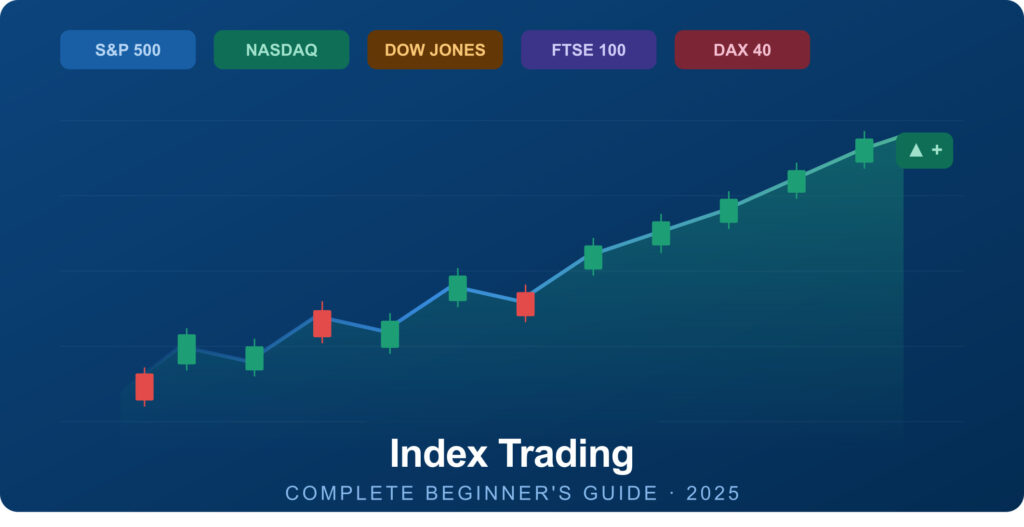
- Indices — gain exposure to entire markets like the S&P 500 or FTSE 100
- Commodities — gold, silver, oil, and natural gas are commonly traded with leverage
- Cryptocurrencies — Bitcoin, Ethereum, and altcoins via futures or CFDs
- ETFs — leveraged ETFs provide built-in 2x or 3x exposure to an index
- Options and futures — derivatives with inherent leverage in their structure
The Benefits & Risks of Using Leverage in Trading
Benefits
- Amplified returns — small, accurate price moves generate meaningful profits even with limited capital
- Lower capital requirement — access larger positions without tying up significant funds
- Portfolio diversification — with less capital locked per trade, you can spread across more positions
- Short selling — go short on falling markets, profiting from price declines
- Market access — markets like forex would be inaccessible to many without leverage
Risks
- Amplified losses — the same multiplier that boosts gains accelerates losses equally
- Margin calls and liquidation — accounts can be wiped out without warning during volatile moves
- Overnight financing costs — keeping leveraged positions open overnight incurs daily interest charges
- Emotional pressure — watching a leveraged position swing rapidly creates psychological stress, leading to impulsive decisions
- Overtrading — easy access to large positions tempts traders to overtrade
A SEBI study found that over 90% of individual retail traders in equity F&O segments incurred net losses — and transaction costs alone consumed 15–50% of the profits made by those who did win.
Risk Management with Leverage-What is Leverage in trading?
Leverage without risk management is speculation without a plan. Here are the non-negotiable practices every leveraged trader should follow:
- Use stop-loss orders on every trade — set your exit before you enter. This prevents a small loss from becoming an account-ending one.
- Risk only 1–2% of capital per trade — if your account is $5,000, risk no more than $50–$100 on any single position.
- Keep leverage low — professional traders rarely exceed 5:1–10:1 despite much higher limits being available.
- Monitor your margin level continuously — don’t just check your P&L. Watch your margin level percentage.
- Avoid holding highly leveraged positions overnight — overnight financing costs add up, and news events can gap markets against you.
- Use a demo account first — practice leverage trading without real capital until you’re consistently profitable on paper.
- Never trade with money you can’t afford to lose — leverage doesn’t change this fundamental rule; it makes it more urgent.
Top 3 Strategies for Using Leverage in Trading
1. Trend Following with Moderate Leverage
This is the most beginner-friendly leveraged strategy. Identify a clear trend using moving averages or price structure, enter in the direction of the trend with 5:1–10:1 leverage, and place your stop-loss below the last swing low (for long trades). The goal is to ride momentum while keeping risk controlled. Avoid this strategy in choppy, sideways markets.
2. Breakout Trading
Wait for a financial instrument to break a key price level — a resistance zone, a consolidation range, or a significant high — then enter with leverage as the breakout confirms. Breakouts often produce sharp, fast moves that suit leveraged positions well. Set a tight stop just below the breakout point. Keep position size small, as false breakouts are common.
3. Hedging with Leverage
Experienced traders use leverage not just to speculate but to hedge existing positions. For example, if you hold a long-term stock portfolio and the market starts to look shaky, you can open a small short position using leverage on an index CFD to offset potential losses. This requires a solid understanding of correlation and position sizing — it’s not a beginner strategy.
FAQs
Can beginners use leverage trading?
Beginners can access leverage, but it’s strongly advised to start with very low ratios (2:1 or 3:1) and practice on a demo account first — leverage magnifies mistakes just as much as successes.
Is leverage risky in trading?
Yes. Leverage significantly increases risk because losses are calculated on the full position size, not just your margin. A single bad trade can erase an entire account.
What is the difference between leverage and margin?
Margin is the deposit you put down to open a trade; leverage is the ratio of that deposit to your total position size. Margin is the tool — leverage is the force it creates.
How much leverage should a beginner use?
Beginners should stick to 2:1 to 5:1 leverage at most. Many professional traders rarely exceed 10:1, even with years of experience and sophisticated risk management systems.
What is leverage in crypto trading?
Crypto leverage trading lets you control a larger cryptocurrency position using borrowed funds, typically through margin accounts, futures contracts, or perpetual swaps on exchanges like Binance or Kraken. Ratios can range from 2x to 100x or more.
How to trade gold with leverage?
Gold can be traded with leverage through CFDs, futures contracts, or spread betting platforms. A typical margin requirement for gold is 5–10%, meaning 10:1–20:1 leverage. You speculate on gold’s price movement without owning physical gold. Always use stop-losses — gold can move sharply on economic data and geopolitical events.
Conclusion
Leverage is a double-edged sword — that phrase exists for a reason. It can turn a small account into a meaningful market participant, and it can turn a winning strategy into a losing one if position sizes aren’t controlled.
The traders who use leverage successfully aren’t the ones chasing the highest ratios. They’re the ones who treat risk management as seriously as trade selection, who keep leverage low, and who understand that survival — staying in the game — is the foundation of long-term profitability.
Start small. Practice on demo. Trade what you understand. And never risk more than you can afford to lose.
Disclaimer: This article is for educational purposes only and does not constitute financial advice. Leveraged trading involves significant risk and is not suitable for all investors. Always consult a qualified financial advisor before trading with leverage.