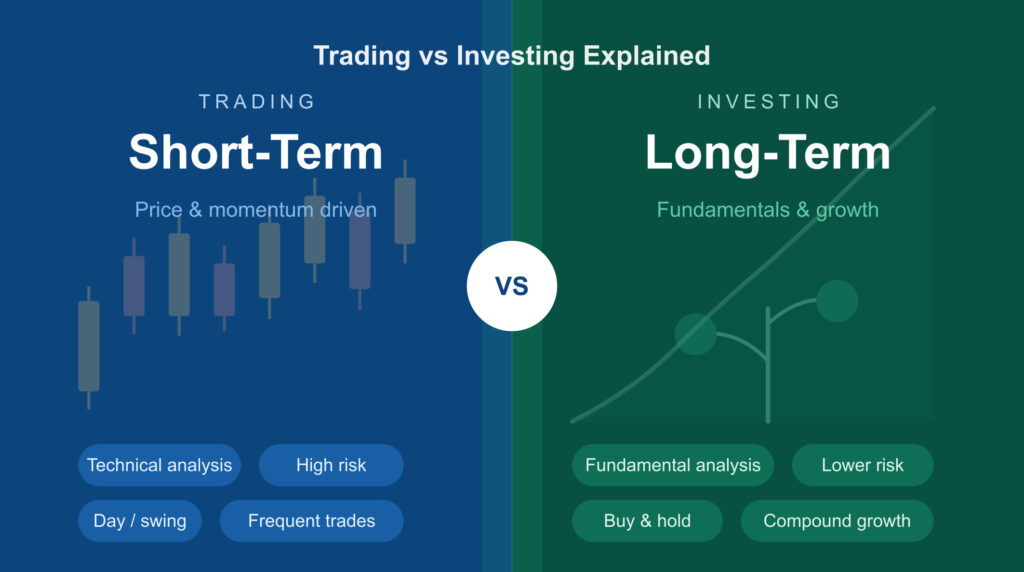
The forex market is the largest financial market on earth, with over $7.5 trillion traded daily. Behind every currency price movement is a story — and forex analysis is how traders learn to read it.
At its core, forex analysis is the process of evaluating currency pairs to forecast future price direction. Traders use it to decide when to enter or exit a trade, how much risk to take, and which pairs to focus on. Without analysis, trading becomes little more than guesswork.
There are two primary schools of thought: fundamental analysis, which focuses on economic forces and macroeconomic data, and technical analysis, which focuses on price charts, patterns, and indicators. A third approach — sentiment analysis — also exists, though it’s typically used alongside the other two rather than on its own.
Understanding both methods is not optional if you want to trade consistently. Even if you prefer one style, market-moving events can disrupt any chart setup in seconds. Let’s explore each approach in depth.
What Is Fundamental Analysis in Forex?
Fundamental analysis in forex is the study of economic, political, and social forces that drive currency valuations. Rather than looking at price charts, fundamental analysts examine the underlying health of an economy to determine whether a currency should strengthen or weaken over time.
The key economic indicators that fundamental forex traders track include:
- Interest Rates: The most powerful driver. When a central bank raises rates, its currency typically strengthens as capital flows in seeking higher returns. The EUR/USD pair’s dramatic swings in 2024 were largely driven by the rate differential between the U.S. Federal Reserve and the European Central Bank.
- Gross Domestic Product (GDP): Strong GDP growth signals a healthy economy and supports a stronger currency. Weak or contracting GDP puts downward pressure on the pair.
- Inflation (CPI/PPI): Rising inflation often weakens a currency’s purchasing power, though it can also trigger central bank rate hikes that boost the currency short-term.
- Non-Farm Payrolls (NFP): The U.S. jobs report is one of the most market-moving releases globally, affecting the USD across dozens of pairs every first Friday of the month.
- Central Bank Policy: Decisions from the Fed, ECB, Bank of England, and others send ripple effects throughout global forex markets.
- Geopolitical Events: Elections, trade wars, and international conflicts can dramatically shift currency demand overnight.
Fundamental analysis is essentially asking: “What is this currency actually worth, based on real-world economic conditions?” It’s less about the price on the chart today, and more about where the price should logically be heading over the coming weeks and months.
Advantages of Fundamental Analysis
✅ Strengths
- Explains why currencies move, not just how
- Ideal for identifying long-term trends and macro cycles
- Helps traders avoid being on the wrong side of major economic shifts
- Strong for position trading and swing trading strategies
- Provides context that charts alone can’t show
⚠️ Weaknesses
- Data interpretation can be subjective and complex
- Not suitable for short-term or intraday scalping
- Markets can move opposite to fundamentals (irrational behavior)
- Requires a deep understanding of macroeconomics
- Can lead to information overload
Limitations of Fundamental Analysis
Despite its power, fundamental analysis has real blind spots. Markets don’t always behave rationally. A currency can remain undervalued for months even when the economic data clearly supports appreciation — simply because of investor sentiment or short-term capital flows.
Another significant limitation is timing. A fundamental trader might correctly identify that the Japanese yen is undervalued, but entering too early (or too late) can lead to substantial losses before the market eventually agrees. As the famous economist John Maynard Keynes noted, markets can remain irrational longer than you can remain solvent.
Fundamental analysis is also poorly suited to high-frequency or day trading. By the time a news event is fully priced in, the opportunity is often already gone. This is why most fundamental traders operate on daily, weekly, or monthly timeframes.
What Is Technical Analysis in Forex?
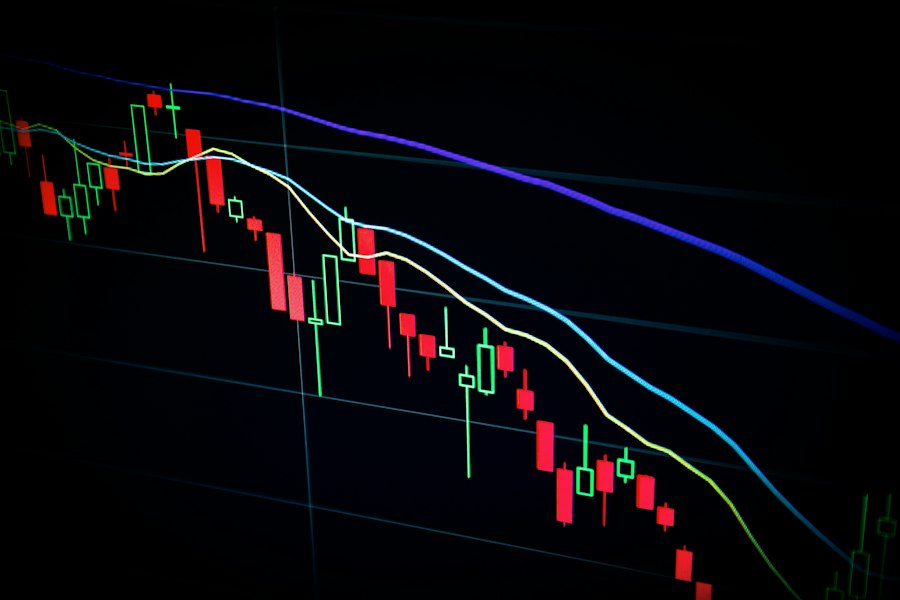
Technical analysis takes a different approach entirely. Rather than asking what a currency should be worth, it asks: “What has price been doing, and what is it likely to do next?” Technical analysts believe that all relevant market information — including economic fundamentals — is already reflected in the price chart.
The main tools used in technical analysis include:
- Understanding Forex Analysis Formations like doji, engulfing candles, and pin bars signal potential reversals or continuations.
- Support and Resistance Levels: Price zones where buying or selling pressure has historically emerged — one of the most universally watched concepts in all of trading.
- Moving Averages (MA/EMA): Smooth out price action to reveal the underlying trend direction. The 50-day and 200-day MAs are widely followed by institutional traders.
- RSI (Relative Strength Index): Measures momentum to identify overbought or oversold conditions.
- MACD: Shows the relationship between two moving averages and can signal trend changes.
- Fibonacci Retracements: Used to identify potential pullback levels within a trend.
- Chart Patterns: Head and shoulders, double tops/bottoms, triangles, and flags are among the most relied-upon formations.
The core assumption of technical analysis is that price patterns repeat because human psychology repeats. Fear and greed drive markets, and those emotions tend to create similar price formations across different time periods and different currency pairs.
Advantages of Technical Analysis
✅ Strengths
- Works on all timeframes — from 1-minute scalps to weekly swings
- Provides precise entry, stop-loss, and take-profit levels
- Easier to learn initially — everything is on the chart
- Highly adaptable to trending, ranging, and volatile markets
- Widely used by retail and institutional traders alike
⚠️ Weaknesses
- Lagging indicators — signals often come after the move has started
- Subjective — two traders can interpret the same chart differently
- Can generate false signals, especially around major news events
- May fail during black swan events or extreme market conditions
- Risk of “indicator overload” and paralysis by analysis
Limitations of Technical Analysis
Technical analysis has one fundamental weakness it can never fully escape: it is entirely backward-looking. Every indicator, every pattern, every moving average is calculated from historical price data. The future is never guaranteed to repeat the past.
Perhaps most critically, technical analysis struggles during major economic releases. When the U.S. Non-Farm Payrolls report comes in wildly different from expectations, or when a central bank surprises the market with an unscheduled rate decision, chart patterns can be blown through in seconds. A perfect support level can become irrelevant when a 200-pip candle forms in under a minute.
Over-reliance on indicators is another common trap. Many traders stack five, six, or more indicators on a single chart, creating so many conflicting signals that decision-making becomes paralyzed. The irony is that the more indicators you add, the less clarity you often gain.
Fundamental vs Technical Analysis in Forex
Now that both approaches are clear, let’s compare them directly. The table below summarizes the core differences traders need to understand:
| Factor | Fundamental Analysis | Technical Analysis |
|---|---|---|
| Primary Focus | Economic data, news, central bank policy | Price charts, patterns, and indicators |
| Best Timeframe | Long-term (weeks, months, years) | Short to medium-term (minutes to weeks) |
| Core Question | “What should this currency be worth?” | “What will price do next based on history?” |
| Key Tools | Economic calendar, GDP, CPI, NFP, interest rates | Moving averages, RSI, MACD, support & resistance |
| Trader Style | Position traders, macro investors | Day traders, scalpers, swing traders |
| Timing Precision | Low | High |
| Big Picture View | Strong | Limited |
| Learning Curve | Steep (economics knowledge required) | Moderate (visual, pattern-based) |
| Reaction to News | Directly driven by news events | Can be caught off-guard by surprises |
| Best Used For | Identifying macro trends and currency bias | Timing entries, exits, and stop placement |
💡 Key Insight
A simple way to remember the distinction: fundamental analysis tells you what to trade and why — technical analysis tells you when to trade and where. Used together, they cover the full picture.
Which Analysis Works Best for Forex Trading?
There is no universally superior method — and anyone who insists otherwise is oversimplifying a complex market. The “best” approach depends almost entirely on your trading style, timeframe, and personal strengths.
Consider these three trader profiles:
📊
The Day Trader
Relies heavily on technical analysis. Economic data provides context, but chart patterns and intraday momentum drive decisions. Timeframe: 15 minutes to 4 hours.
🌍
The Macro Investor
Prioritizes fundamental analysis — interest rate cycles, GDP trends, and central bank divergence. May hold positions for weeks or months. Timeframe: daily to monthly charts.
⚖️
The Hybrid Trader
Uses fundamentals to identify strong currency pairs, then applies technical analysis to find low-risk entry points. This approach is used by many professional forex traders.
Research consistently shows that most experienced professional traders do not rely exclusively on one method. They use fundamental analysis to build a market narrative and technical analysis to execute it with precision.
Why Combining Both Analyses Can Be Powerful

The real power in forex trading emerges when fundamental and technical analysis reinforce each other. Here’s a practical example of how a combined approach works:
- Step 1 — Build the Fundamental Bias: You notice the U.S. Federal Reserve has signaled rate hikes while the European Central Bank is cutting. This creates a fundamental bias: sell EUR/USD (sell euros, buy dollars).
- Step 2 — Confirm with Technical Analysis: You pull up the EUR/USD daily chart and notice the price is trading below both the 50-day and 200-day moving averages. The RSI shows moderate momentum without being oversold. A recent pullback has created a potential short entry near a key resistance level.
- Step 3 — Execute with Precision: You enter the short position at resistance with a stop-loss above the swing high and a take-profit near the next support zone. Your fundamental thesis gives you conviction; your technical setup gives you timing.
This kind of confluence — where economic data and chart signals align — produces the highest-probability trade setups available in forex. Neither analysis alone would have provided as complete a picture.
Choosing the Right Approach for You
Choosing between — or combining — fundamental and technical analysis comes down to four personal factors:
- Time availability: If you can only watch the market for 30 minutes a day, swing trading with a technical focus is more practical than monitoring economic calendars around the clock.
- Trading timeframe: Scalpers and day traders almost always lean technical. Position traders and macro investors lean fundamental.
- Risk tolerance: Fundamental positions can take weeks to play out, requiring patience and the ability to tolerate drawdowns. Technical trades are typically shorter-duration with tighter stops.
- Personal strengths: Some traders have a natural aptitude for economics and global events. Others are better at reading charts and visual patterns. Neither is a superior trait — they’re just different.
Most beginners start with technical analysis because it is more accessible and visual. As they develop, many gradually incorporate fundamental awareness — checking the economic calendar before entering trades, understanding how central bank decisions might affect their positions, and building a broader sense of market narrative.
📌 Pro Tip for Beginners
Start by mastering one or two technical tools (support/resistance + a momentum indicator like RSI). Then layer in fundamental awareness by checking a free economic calendar before each trading session. You don’t need to be a macroeconomist — just know when major news is scheduled so you’re not caught off-guard.
Conclusion
The debate between fundamental and technical analysis in forex is ultimately a false choice. Both methods offer genuine, proven value — they just operate on different dimensions of the market. Fundamental analysis gives you the macro story behind currency movements: interest rates, economic growth, central bank policy, and geopolitical risk. Technical analysis gives you the micro execution tools: precise entries, stop-loss placement, and pattern recognition.
Rather than picking a side, the smartest forex traders let these two approaches work together. Use fundamentals to understand why a currency should move. Use technicals to decide when and where to act. That combination — backed by sound risk management — is what separates consistent traders from those who rely on guesswork.
Whether you’re a beginner finding your footing or an experienced trader refining your edge, investing time in both disciplines will only make you a stronger, more adaptive market participant.
Frequently Asked Questions
Is fundamental analysis better for beginners in forex?
Most beginners find technical analysis more accessible because it is visual and chart-based. However, developing basic fundamental awareness — especially around major news events — is important even at the beginner level to avoid unexpected losses.
Can technical analysis work without fundamentals?
Yes, many successful short-term and intraday traders use technical analysis exclusively. However, ignoring fundamentals entirely — especially around scheduled economic releases — increases the risk of being caught by sudden, news-driven price spikes that technical setups cannot predict.
Do professional forex traders use both analyses?
Yes. The vast majority of professional and institutional forex traders incorporate both. Fundamental analysis shapes the macro directional bias, while technical analysis provides the precision needed for trade execution, position sizing, and risk management.
Which analysis is best for long-term forex trading?
Fundamental analysis is better suited to long-term forex trading. Long-term currency trends are largely driven by macroeconomic factors such as interest rate differentials, GDP growth trajectories, and central bank monetary policy cycles — all of which are the domain of fundamental analysis.
Can I switch between analysis methods?
Absolutely. Many experienced traders adapt their approach depending on market conditions. During high-volatility news periods, fundamental awareness takes priority; during quieter sessions, technical setups become the primary decision-making tool. Flexibility is a core trait of skilled forex traders.