If you have ever watched a professional trader firing off dozens of trades in a single morning session, you were probably watching a scalper at work. Scalping is one of the fastest and most intense trading styles available — and it is also one of the most misunderstood by beginners.
In this guide you will learn exactly what scalping in trading is, how it works, the best strategies and indicators to use, and what you need to consider before giving it a try.
Key Takeaways
- what is Scalping in trading? Scalping is a short-term trading style where traders aim to profit from very small price movements by placing many trades per session
- Positions are held for seconds to minutes — never overnight
- Success in scalping requires fast execution, tight risk management, and strong emotional discipline
- The most popular scalping indicators include the Stochastic Oscillator, Parabolic SAR, Moving Averages, and RSI
- Scalping suits highly liquid markets such as major forex pairs, large-cap stocks, and popular crypto assets

What is Scalping?
Scalping is a short-term trading strategy that involves opening and closing multiple positions within very short timeframes — typically between a few seconds and a few minutes — in order to profit from small but frequent price movements.
Rather than waiting for a large trending move, scalpers target tiny price increments repeatedly throughout the day. A single scalp trade might target only 5 to 10 pips or a few cents per share. But when you multiply that by 50, 100, or even more trades in a single session, those small gains can add up to meaningful returns.
Scalping sits firmly within the category of day trading — all positions are opened and closed within the same trading session. No scalp trade is held overnight.
In one sentence: Scalping is the art of making many small profits repeatedly and rapidly, rather than waiting for one big move.
The Essential Elements of Scalping Trading
Scalping is not simply about trading fast. It requires a structured approach built on several non-negotiable foundations.
Setting Up a Trading Plan
Every scalper needs a clear trading plan before they open a single position. This plan defines:
- Which markets and instruments to trade
- Which timeframes to use — typically M1, M5, or M15
- Entry and exit rules based on specific indicator signals or price action setups
- Daily profit targets and maximum loss limits
Trading without a plan in scalping is even more dangerous than in other styles because decisions must be made in seconds. Your plan removes the guesswork so your reactions are automatic and disciplined.
Risk Management
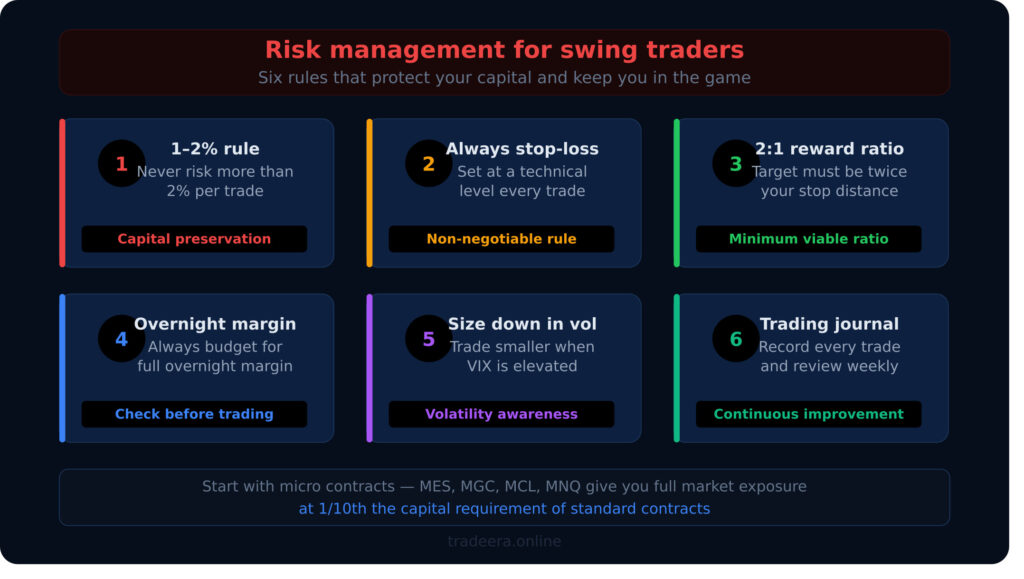
With so many trades being placed, even a small unfavourable win/loss ratio can destroy an account quickly. Effective scalping risk management means:
- Tight stop-losses — typically just a few pips or ticks away from entry
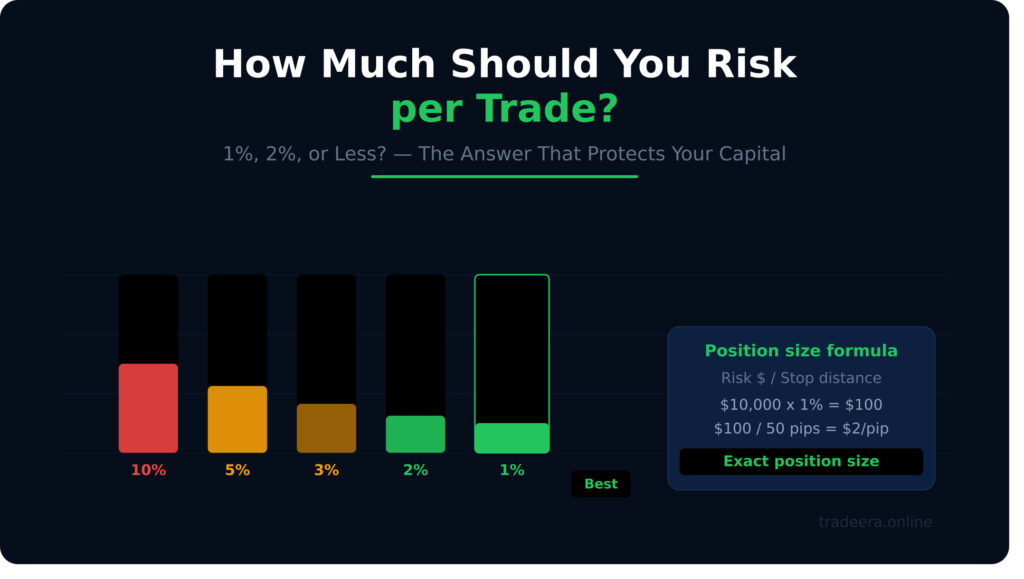
- Consistent position sizing — never risking more than 0.5 to 1 percent of your account on any single scalp
- Defined risk-reward ratio — even at 1:1.5, consistent winners keep you profitable over many trades
- Transaction cost awareness — spreads and commissions add up fast across 50 to 100 daily trades
Self-Control
Scalping is psychologically demanding. The pace is relentless, losses come quickly, and the temptation to revenge trade after a bad run is constant. Successful scalpers develop almost mechanical discipline — following their rules without deviation regardless of what emotion is telling them.
Market Conditions
Scalping performs best in liquid, volatile markets with tight spreads. Illiquid or slow-moving markets produce fewer opportunities and higher relative costs. The best conditions for scalping include major forex sessions (London and New York overlaps), high-volume stock market opens, and active crypto exchanges.
Advantages of Scalping
- Frequent opportunities — liquid markets produce dozens of scalp setups every session
- No overnight risk — all positions are closed before the session ends, eliminating gap risk
- Small capital requirement — targeting small moves means you do not need a large account to get started
- Quick feedback loop — you know within minutes whether your trade worked, allowing fast learning
- Works in ranging and trending markets — adaptable strategies exist for both conditions
- Less exposure to fundamental risk — short holding times mean major news events rarely affect open positions
Disadvantages of Scalping
- High transaction costs — spreads and commissions across hundreds of trades can significantly eat into profits
- Extremely time-intensive — requires constant screen attention for hours at a time
- High mental and physical demand — the intensity leads to fatigue and emotional burnout faster than other styles
- Requires fast execution — even a one or two second delay can turn a winning setup into a loser
- Not suitable for all brokers — some brokers restrict scalping or have execution speeds too slow for the strategy to work
- Steep learning curve — beginners often lose money quickly before developing the required discipline and skill
Scalping Trading Strategies
There is no single “best” scalping strategy — the right approach depends on your preferred indicators, market conditions, and trading personality. Here are the four most widely used scalping strategies:
Stochastic Oscillator
The Stochastic Oscillator is a momentum indicator that compares the current closing price to its price range over a set period. It generates values between 0 and 100, with readings above 80 considered overbought and below 20 considered oversold.
How scalpers use it:
- When the fast line (%K) crosses above the slow line (%D) below the 20 level — potential buy signal
- When %K crosses below %D above the 80 level — potential sell signal
- Best used on M1 or M5 charts for scalping setups
The Stochastic is particularly effective in ranging markets where price oscillates between clear support and resistance levels.
Parabolic SAR
The Parabolic Stop and Reverse (SAR) indicator appears as a series of dots above or below price on a chart. Its logic is simple — dots below price indicate an uptrend and a potential long opportunity. Dots above price indicate a downtrend and a potential short opportunity. When the dots switch sides, it signals a potential trend reversal.
Scalping application:
- Enter long when SAR dots move from above to below the price
- Enter short when dots flip from below to above the price
- Use default settings (0.02, 0.02, 0.2) or tighten to (0.03, 0.03, 0.3) for scalping
- Always combine with at least one confirming indicator to reduce false signals in sideways markets
Scalp with Moving Averages
Moving averages are the backbone of many scalping strategies due to their simplicity and effectiveness at identifying short-term trend direction.
A popular scalping approach uses two short-term moving averages alongside a long-term 200-period MA for trend context:
| Signal | Setup |
|---|---|
| Buy signal | 5-period EMA crosses above 20-period EMA while price is above 200 MA |
| Sell signal | 5-period EMA crosses below 20-period EMA while price is below 200 MA |
| Exit signal | Opposite EMA crossover occurs |
The 200-period MA acts as a filter — only take buy signals above it and sell signals below it. This significantly reduces false crossovers and improves overall win rate.
Relative Strength Index (RSI)
The RSI is a momentum oscillator that measures the speed and magnitude of recent price changes on a scale of 0 to 100. Readings above 70 suggest overbought conditions while readings below 30 suggest oversold conditions.
For scalping specifically, many traders use a shorter RSI period:
- RSI 2 to 5 — extremely sensitive, ideal for M1 scalping
- RSI 7 to 9 — balanced setting for M5 to M15 scalping
- Oversold RSI below 30 rising — potential long scalp entry
- Overbought RSI above 70 falling — potential short scalp entry
Using RSI alongside a moving average or Stochastic adds confluence and filters out many low-quality signals.
Scalping vs Day Trading
Both scalping and day trading share one important rule — no overnight positions. But beyond that, they differ significantly in pace, trade frequency, and psychological demands.
| Factor | Scalping | Day Trading |
|---|---|---|
| Trade duration | Seconds to minutes | Minutes to hours |
| Trades per day | 20 to 100+ | 2 to 20 |
| Profit target per trade | 2 to 10 pips / cents | 10 to 50 pips / dollars |
| Timeframes used | M1, M5 | M15, H1 |
| Stress level | Very high | High |
| Indicator sensitivity | Very short periods | Standard periods |
| Screen time | Constant | Several hours |
| Best markets | Highest liquidity only | Liquid markets |
Day trading is generally considered more accessible for beginners because the pace allows more time for analysis between trades. Scalping demands near-instant reactions and is better suited to experienced traders who have already mastered the basics.
Scalping vs Swing Trading
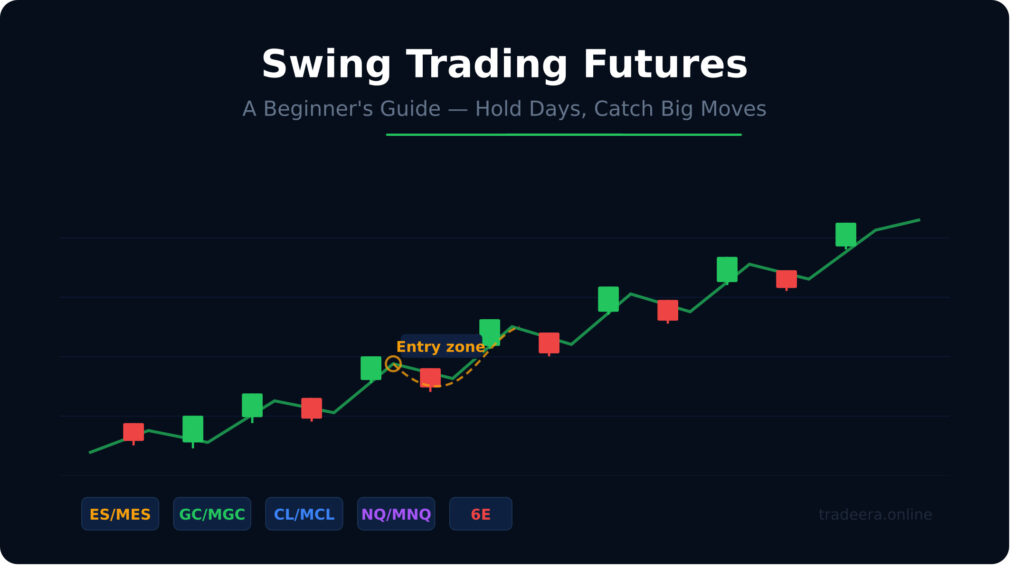
The contrast between scalping and swing trading could not be more dramatic. Where scalpers hunt micro-moves in seconds, swing traders patiently hold positions for days to weeks.
| Factor | Scalping | Swing Trading |
|---|---|---|
| Holding period | Seconds to minutes | Days to weeks |
| Screen time | Constant throughout session | Brief daily check-in |
| Overnight exposure | None | Yes |
| Profit target | Very small per trade | Large per trade |
| Trade frequency | Very high | Very low |
| Psychological demand | Extremely high | Moderate |
| Suitable for | Full-time, experienced | Part-time, beginners |
For most beginners, swing trading is the far more manageable starting point. The slower pace allows time to think, research, and develop good decision-making habits before progressing to faster styles.
What You Need to Know Before Scalping
Before you open your first scalp trade, there are several important practical considerations:
1. Choose the right broker Not all brokers support scalping. You need a broker with fast execution speeds, tight spreads (ideally below 1 pip on major forex pairs), and no restrictions on scalping activity. ECN brokers are generally the best choice.
2. Use a fast, reliable platform MetaTrader 4, MetaTrader 5, and cTrader are the most widely used platforms for scalping. Ensure your internet connection is fast and stable — latency is your enemy in scalping.
3. Start with a demo account Practice your strategy extensively on a demo account before committing real money. Scalping on demo still trains your reactions, chart reading, and discipline without financial consequences.
4. Know the Pattern Day Trader rule US stock traders need to be aware of the Pattern Day Trader (PDT) rule, which requires a minimum account balance of $25,000 for accounts placing four or more day trades within five business days. Forex and crypto scalpers are not affected by this rule.
5. Transaction costs matter enormously A 1-pip spread on a 5-pip target means you need a 20 percent gross profit just to cover costs. Before committing to a scalping strategy, calculate your break-even trade requirements after spreads and commissions.
6. Scalping is not beginner-friendly This point deserves emphasis. The speed and psychological intensity of scalping makes it genuinely unsuitable for most new traders. Most professional traders recommend mastering swing trading or day trading first, then progressing to scalping once solid fundamentals are in place.
Frequently Asked Questions
Is scalping illegal?
No — scalping is completely legal in all major financial markets. Some brokers however have specific terms that restrict or prohibit scalping activity, so always check your broker’s trading conditions.
Can you make money scalping?
Yes, but it requires significant skill, discipline, and experience. Studies suggest that consistent profitability in scalping requires a win rate of around 58 to 62 percent after accounting for transaction costs.
What is the best time frame for scalping?
The M1 (one minute) and M5 (five minute) charts are the most popular timeframes for scalping. Many scalpers also use M15 for context and confirmation of the broader short-term direction.
What are the best indicators for scalping?
The most effective scalping indicators are the Stochastic Oscillator, Parabolic SAR, Exponential Moving Averages (particularly the 5 and 20 EMA combination), and the RSI set to a short period of 2 to 9. Using two or three indicators together provides better signal confirmation than relying on a single indicator alone.
Conclusion
Scalping in trading is one of the most demanding — and potentially most rewarding — short-term strategies available. It suits traders who thrive under pressure, love technical analysis, and have the discipline to execute the same process repeatedly without letting emotions interfere.
But it is not for everyone — and it is certainly not a starting point. Build your trading foundation with longer-timeframe strategies first. Learn to read charts, manage risk consistently, and control your emotions. Then when you are ready, bring that discipline into the fast-paced world of scalping.
If you are serious about learning scalping, start on a demo account. Test your strategy for weeks before going live. And always remember — in scalping, small losses managed correctly are part of the process. It is the discipline to keep them small that makes the difference.
⚠️ Risk Warning: Scalping involves rapid, high-frequency trading that carries significant risk of loss. Transaction costs can eliminate profits quickly. This style is not recommended for beginners. Always use proper risk management and only trade with capital you can afford to lose.
Trade Era — Your Trusted Source for Trading Education